
Nexus War: Civilization
Phantix GamesStrategy
4.32.70K Reviews
- Version
- 0.2.963
- Installs
- 10.00M
- Age Rating
- Teen
Screenshots
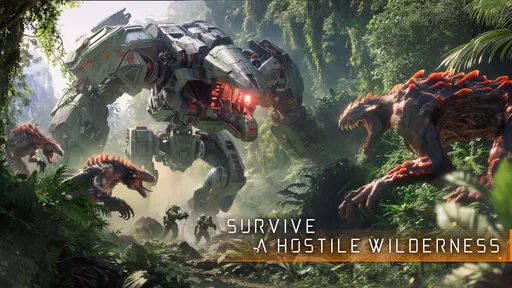
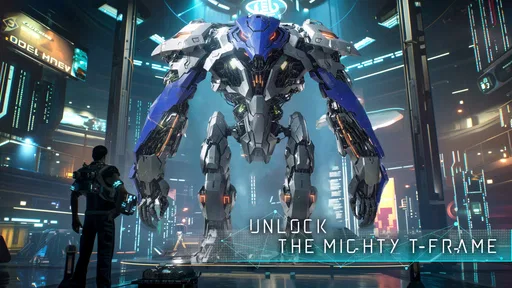
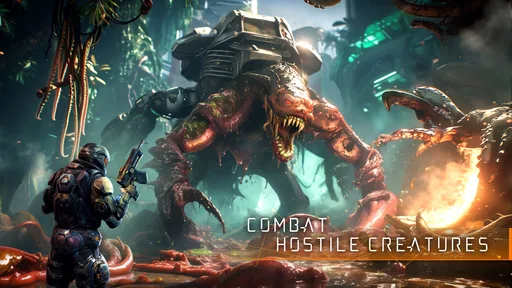

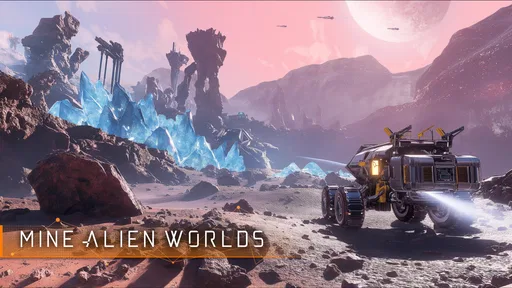

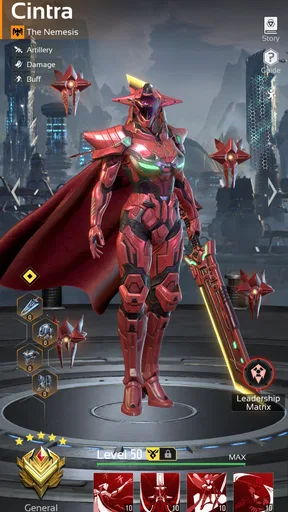
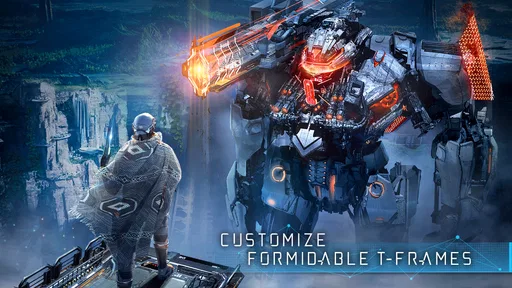
Our Review of Nexus War: Civilization
 Analysis by Appyee
I spent time with Nexus War: Civilization as a mobile strategy game, and my first impression was that it aims for a familiar but appealing space: long-term planning wrapped in a science-fiction setting. The premise is easy to understand. You build toward control of a wider galactic conflict, make decisions about how to use your resources, and gradually turn a small position into something more influential. It is available free of charge, which makes trying it straightforward, although optional purchases can change how carefully you need to manage your spending.
What makes it worth discussing is not simply the sci-fi theme. Plenty of mobile games use planets, fleets, and futuristic factions as decoration. Here, the setting gives the strategic decisions a stronger identity, while the Civilization part of the name suggests a broader sense of development rather than a short arcade session. I found it better suited to players who enjoy checking progress, thinking ahead, and accepting that a good result often comes from several modest choices instead of one dramatic move.
How the game feels after the first sessions
Phantix Games presents this as a strategy title rather than a quick action game, and that distinction matters. I would not recommend opening it while expecting a self-contained five-minute challenge with a clear finish. Its appeal comes from returning to an ongoing situation, reviewing what has changed, and deciding which objective deserves attention next. That rhythm can be satisfying when I have the patience for it, but it can also feel slow if I want immediate action every time I pick up my phone.
The science-fiction presentation helps the game avoid feeling like another medieval kingdom builder. The galactic framing makes expansion and competition feel more natural, and it gives the strategic layer a clear mood. At the same time, the futuristic setting does not remove the usual demands of the genre: progress needs planning, resources need discipline, and careless decisions can leave me waiting or rebuilding momentum.
One useful way to approach it is to treat each session as a review of priorities rather than a hunt for constant rewards. I found myself asking whether the next improvement would strengthen my position now, prepare me for a later objective, or simply look attractive without solving an actual problem. That question is more valuable here than tapping through every available action as quickly as possible.
Free access and the real meaning of value
The game can be installed and played for free, so the initial value is easy to judge: I can explore its core experience without paying an entry fee. That is a genuine advantage for anyone unsure whether a large-scale mobile strategy game will fit their routine. It also means the sensible approach is to play long enough to understand the progression before deciding whether any purchase is worthwhile.
Optional in-app purchases range from $0.99 to $99.99 per item. That wide span is the most important cost detail for a careful player. The lower end can represent a small convenience, while the upper end is a serious discretionary expense, especially in a game designed to be played over time. I would set a personal limit before buying anything, rather than allowing a frustrating session or a tempting offer to make the decision for me.
Because the game is free to start, I judge paid value differently from a premium game. A premium title asks me to pay once for a defined experience. This one asks me to decide whether optional spending improves my relationship with an ongoing strategy game. If I enjoy planning and steady progress, I may get plenty of value without paying. If I dislike waiting, competitive pressure, or purchase prompts in free games, the no-cost download does not automatically make it good value for me.
I also think the age guidance matters when deciding who should play. It carries a Teen content rating, so I would not treat it as a universal family game simply because it is free. Parents should make their own judgment about whether the tone, competition, and purchase structure suit a younger player, and I would keep payment controls firmly under adult supervision.
Small decisions that make the strategy clearer
My most useful habit was to separate urgent decisions from attractive decisions. A new upgrade can look important because it is available, but that does not mean it is the best use of current resources. Before committing, I would identify the immediate obstacle: weak development, an exposed position, slow progress, or a lack of flexibility. Choosing around that obstacle made the game feel more deliberate and reduced the sense of randomly moving through menus.
A second practical tip is to avoid spending simply to erase a short-term inconvenience. In a long-running strategy game, a purchase that solves one delay may not improve the underlying plan. I got more satisfaction from learning why progress had slowed and changing my priorities than from treating every pause as a problem that needed money. This is especially important because the purchase range reaches from small amounts to a much larger top tier.
I also recommend using short sessions for assessment and longer sessions for execution. When I only have a few minutes, I can inspect the current state, decide what matters next, and leave with a clear plan. When I have more time, I can carry out that plan without making rushed choices. This approach suits a game that rewards continuity and helps prevent distracted tapping from becoming the main activity.
Another trade-off became clear when I compared immediate growth with preparation. Pushing forward quickly can feel rewarding, but a broader position is not automatically a stronger one if it leaves too many weaknesses behind. I preferred building a stable base before chasing every opportunity. That will not be the right answer in every situation, but it is a useful default for players who tend to expand first and think about consequences later.
Where it fits among mobile strategy games
Compared with a fast competitive strategy game, Nexus War: Civilization feels more comfortable for players who want a continuing project. It is less appealing if the main attraction is rapid matches, instant restarts, or a clearly defined winner within one sitting. A traditional turn-based strategy game may be better for someone who wants every action to be isolated, fully deliberate, and free from the pressure of an ongoing mobile progression loop.
On the other hand, compared with a purely casual builder, this game has a stronger sense of conflict and long-term direction. The galactic setting gives the choices more weight than simply arranging attractive structures. I would choose it over a relaxed decorating game when I want decisions to matter, but I would choose a simpler casual title when I want something that asks very little attention.
It also sits in an awkward middle ground for players who want a completely paid experience. Free access is a strength because I can test the game first, yet the optional purchase structure means I need to remain aware of how I respond to progression friction. A premium strategy game may offer a cleaner relationship between payment and content, while this one offers a lower barrier to entry and the chance to continue without an upfront charge.
That comparison is why I would not call it the best strategy game for everyone. Its value depends on whether I enjoy the particular compromise: an accessible starting point, a persistent science-fiction campaign, and the need to manage both in-game priorities and real-world spending boundaries.
Who will get the most from it
I think the strongest audience is made up of players who like checking a developing plan several times throughout the day. If you enjoy watching a position improve, weighing competing goals, and learning from a setback rather than restarting immediately, the structure should feel familiar in a good way. The game is also a reasonable choice for someone curious about mobile strategy but unwilling to pay before understanding the experience.
A realistic everyday use case would be a commute or lunch break. I might open the game, review what has changed, choose one priority, and close it once that decision is made. Later, I can return with a clearer purpose instead of trying to complete everything in one sitting. That routine makes the ongoing format feel manageable and prevents it from taking over every spare minute.
It is less suitable for someone who wants a fully offline-feeling experience with no concern about long-term progression or purchases. I would also steer away from it if I know I am vulnerable to spending when a game slows me down. The free download is not a reason to ignore the upper end of the purchase range; it is a reason to establish boundaries before the game becomes familiar.
Players looking for a story-driven adventure with a fixed ending may also prefer something else. The appeal here is the evolving strategic process, not a tightly scripted journey that I can finish and put aside. Likewise, if I want precise, short matches with no persistent commitment, a traditional competitive strategy alternative will probably suit me better.
Device compatibility and ongoing expectations
The game supports Android devices running version 5.0 or later, which gives it a broad technical reach. Its current version is 0.2.963, so I would expect the experience to remain part of an evolving project rather than treating it as a completely static release. That is not automatically good or bad, but it does affect how I approach it: I would be comfortable exploring it now while accepting that balance and presentation can develop over time.
It was released on June 29, 2023, and its audience has grown to over ten million installs. The average rating is 4.3 from around forty-three thousand ratings, with roughly two thousand seven hundred written reviews. Those figures suggest that the game has attracted substantial interest, but they do not replace personal testing. Strategy games can divide players sharply because one person enjoys gradual progression while another sees the same pacing as a burden.
For me, the practical takeaway is to begin slowly. I would learn the basic flow, decide whether the science-fiction setting genuinely holds my attention, and only then consider optional spending. I would also avoid judging the whole game by one unusually good or frustrating session. The important question is whether I still enjoy making decisions after the novelty of the setting has settled.
My recommendation after weighing the trade-offs
I recommend Nexus War: Civilization to players who want a free-to-start science-fiction strategy game and are comfortable with a continuing progression experience. Its strongest quality is the way the galactic theme gives ordinary strategic planning a clear identity. I enjoyed it most when I treated it as a long-term project, kept my priorities narrow, and resisted the urge to solve every inconvenience immediately.
The main caution is financial and psychological rather than technical. Since purchases run from $0.99 to $99.99 per item, I would not approach it casually if spending limits are difficult to maintain. Free access gives the game a fair chance, but it does not guarantee that every player will find the later progression equally satisfying without paying. That is the central trade-off, and it should be part of the decision from the beginning.
My final verdict is a qualified yes. Install it if you enjoy galactic strategy, gradual development, and making plans across multiple sessions. Play it cautiously if you are comparing it with premium strategy games or fast match-based alternatives, because its ongoing structure will not suit every preference. The best value comes from treating the free version as a genuine trial, not as a promise that optional purchases are necessary. If the planning itself keeps me interested, the game has enough room to become a worthwhile regular habit; if I only enjoy it when progress is accelerated, I would skip the spending and choose a different kind of strategy game.
Verdict
Strengths of Nexus War: Civilization
- Large-scale battles make alliances and coordination feel meaningful.
- Multiple civilizations offer varied playstyles and strategic approaches.
- Base development provides steady goals beyond individual battles.
- Regular events can add variety and useful rewards to daily play.
- The futuristic setting gives the game a distinctive visual identity.
Limitations of Nexus War: Civilization
- Progress can become heavily dependent on spending as competition increases.
- Long upgrade timers may limit meaningful actions between play sessions.
- The interface can feel crowded for new players learning its systems.
- Alliance activity is important, making solo play less rewarding.
- Resource management becomes repetitive during extended sessions.
Other Releases by Phantix Games
View All
Mafia City
Strategy4.5

Chief Almighty
Strategy4.6

Savage Survival:Jurassic Isle
Strategy4.5

Dino Cataclysm: Survival
Strategy3.4
Similar Picks in This Category
View All
Clash of Clans
Supercell4.5

Plants vs. Zombies™
ELECTRONIC ARTS3.7

Lords Mobile: Kingdom Wars
IGG.COM4.5

Clash Royale
Supercell4.4

State.io — Conquer the World
CASUAL AZUR GAMES4.1

Car Driving School : Car Games
Spark Game Studios3.9
Frequently Asked Questions
What is Nexus War: Civilization?
Nexus War: Civilization is a strategy game for mobile devices that combines city building, resource management, hero collection, and real-time or asynchronous tactical battles. Players develop a base, research technologies, recruit powerful characters, and compete against other players while exploring a science-fiction world. Progress generally depends on planning, upgrading the right buildings, and using each hero’s abilities effectively.
Is Nexus War: Civilization free to download and play?
The game is generally available as a free download, but it includes optional in-app purchases. These purchases may provide resources, speed up construction, unlock packs, or offer additional progression opportunities. You can play without spending money, although free players may need more patience when upgrading buildings, training units, and competing with users who invest in premium items.
Does Nexus War: Civilization require an internet connection?
Yes, Nexus War: Civilization is designed as an online strategy experience and normally requires a stable internet connection. Online access is needed to synchronize your city, participate in events, communicate with alliances, collect rewards, and interact with other players. Because of this, the game is not a suitable choice for completely offline play during flights, commutes, or areas with unreliable connectivity.
Is Nexus War: Civilization suitable for beginners?
Nexus War: Civilization is reasonably accessible for newcomers because its early missions introduce construction, research, recruitment, and combat step by step. However, the number of systems can become overwhelming as your settlement grows. New players should follow the tutorial, complete daily objectives, protect resources, and avoid upgrading everything randomly. Joining an active alliance can also provide guidance, assistance, and useful rewards.
Are there ads or in-app purchases in Nexus War: Civilization?
Nexus War: Civilization may include optional purchases and promotional offers connected to resources, character development, upgrades, or limited-time events. Depending on the version and platform, advertising or reward-based promotional content may also appear. Before downloading, check the store listing for the latest monetization details, and consider using parental controls if younger players will access the game, since virtual purchases can accumulate quickly.
Play our best games!


